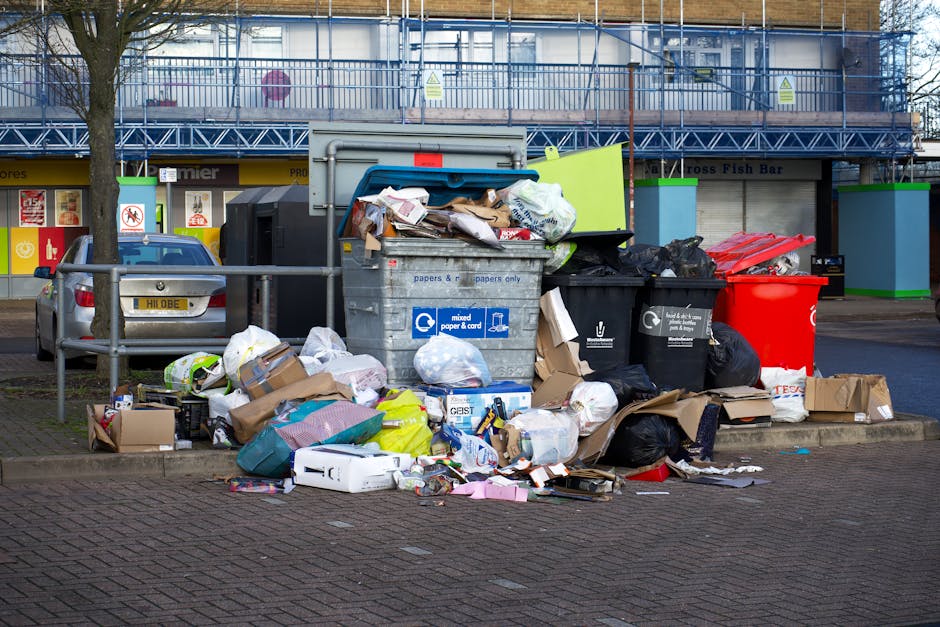
Access Issues on Narrow Stratford Streets Rubbish Removal Solutions
Narrow streets can turn a simple clear-out into a bit of a headache. In Stratford, that often means tight parking, awkward turning circles, shared access, stairwells, alleyways, and rubbish that seems to have been placed in exactly the worst possible spot. If you are trying to organise a clear-out, renovation tidy-up, or bulky waste collection, access issues on narrow Stratford streets rubbish removal solutions are all about making the job work safely, quickly, and without turning the road into an obstacle course.
The good news? Most access problems can be handled with the right planning. Whether it is a top-floor flat, a back garden with no side passage, or a business premises on a busy residential road, there are practical ways to remove waste without blocking neighbours, damaging property, or wasting time. Below, we break down how the process works, what to watch out for, and how to choose the right approach for your property. If you want a broader sense of what professional clearance can cover, the main waste removal service page is a useful starting point.
Why Access Issues on Narrow Stratford Streets Rubbish Removal Solutions Matters
Let's face it: access is often the thing people underestimate. You can have all the right bags, the right van, and the right team, and still lose half an afternoon because nobody can safely get the load out. Narrow Stratford streets tend to bring a few familiar problems together at once. Vehicles may struggle to park near the property. Footpaths can be busy. There may be controlled parking, low visibility, or no room to leave items out in the open for long. And if the rubbish is heavy, awkward, or sharp-edged, you need a route that works on the first try.
That matters for three reasons. First, safety. Carrying waste through cramped spaces increases the chance of trips, grazes, knocks to walls, and damaged doors. Second, efficiency. If a crew has to keep moving items twice because access was not planned properly, the whole job slows down. Third, neighbour relations. Nobody wants a skip or a pile of rubbish cluttering a narrow road longer than necessary. In a place like Stratford, where people are often living and working close together, being considerate is not a nice extra. It is part of doing the job properly.
There is also a quality issue. Poor access planning can lead to half-finished clearances, missed items, or extra charges that could have been avoided. A good plan means less stress, fewer surprises, and a cleaner finish. Simple, really.
How Access Issues on Narrow Stratford Streets Rubbish Removal Solutions Works
In practice, narrow-street rubbish removal is usually a logistics exercise first and a lifting job second. The team looks at where the waste is located, how it can be reached, what sort of vehicle can use the street, and whether the load needs to be broken down before removal. In some cases, the answer is a smaller vehicle. In others, it is a carry-out by hand from the property to a collection point. Sometimes it is a combination of the two.
Here is the general process:
- Assess the access - Is there driveway space, kerbside room, a side passage, a rear entrance, or only front-door access?
- Identify the waste type - General rubbish, furniture, builders' waste, garden waste, or mixed items all behave differently.
- Plan the safest route - Shorter routes are not always better if they involve steep steps, low ceilings, or fragile surfaces.
- Choose the right vehicle and crew size - A bulky van might be perfect on one road and useless on another. A smaller vehicle can sometimes save the day.
- Remove and load carefully - Items may need to be dismantled, bagged, stacked, or moved in stages to avoid blocking the street.
- Clear up afterwards - A proper service should leave the route tidy, not just empty.
For example, a flat on a Stratford side street with a narrow stairwell and no lift may need a two-person crew and a compact van parked a short walk away. That is perfectly manageable if it is planned. It just needs a realistic approach, not optimism and a prayer. And yes, some jobs are trickier at 8am than they look on the phone call at 6pm the night before.
For awkward residential moves that involve furniture, the furniture clearance and furniture disposal services are particularly relevant, because bulky pieces often need partial dismantling before they can leave a narrow property safely.
Key Benefits and Practical Advantages
The main benefit is obvious: the rubbish gets removed without turning the street into chaos. But there are several less obvious advantages too.
- Less disruption - Careful access planning keeps noise, blocking, and delays to a minimum.
- Lower risk of damage - Narrow hallways, paintwork, banisters, and door frames are easier to protect when the route is thought through properly.
- Better safety - Fewer awkward lifts and fewer rushed movements mean fewer accidents.
- More predictable timing - If the access is understood in advance, the job is easier to schedule realistically.
- Cleaner end result - The route, loading point, and surrounding area are tidied as part of the service.
- Less neighbour friction - A short, efficient visit is far easier for everyone living nearby.
There is also a quiet but important confidence benefit. When you know the job has been planned properly, you stop worrying about whether a sofa will fit through the doorway or whether the van will end up wedged opposite a corner shop. That peace of mind is worth something.
Expert summary: On narrow Stratford streets, the best rubbish removal solution is rarely the one with the biggest vehicle. It is the one that matches the access, the item type, and the timing of the street. Size helps only when it is the right size.
Who This Is For and When It Makes Sense
This kind of service is useful for a wide range of people, not just homeowners. In Stratford, access issues can affect flats, terraced houses, shop units, offices, and properties under renovation.
You may need this approach if you are:
- clearing a flat with stairs, no lift, or narrow shared corridors
- emptying a house on a road where parking is limited
- disposing of old furniture that cannot be carried down in one piece
- clearing builder's rubble or mixed renovation waste from a site with poor vehicle access
- managing garden waste from a rear garden with no side access
- removing office items or stock from a premises on a busy street
- dealing with inherited items, garage clutter, or loft contents that have to travel through tight internal spaces
It also makes sense when time is tight. If rubbish is stacking up in the hallway, or a landlord has handed over a deadline, the last thing you want is a service that arrives unprepared and has to reschedule. That kind of delay is maddening. Better to assess the access issue up front and choose a method that fits the property, not the other way round.
If you are dealing with a whole-property clearance, it can help to compare related options like house clearance, home clearance, or even flat clearance depending on the layout and amount of waste involved.
Step-by-Step Guidance
Here is a straightforward way to handle rubbish removal on a narrow Stratford street without the usual stress.
- Walk the access route first
Look at the front path, stairways, internal doors, rear access, and any turn points. Notice low ceilings, sharp corners, and anything fragile. - Group waste by size and weight
Bulky furniture, bagged rubbish, and heavy builder's debris should not be treated the same way. Mixed waste needs more planning. - Measure the obvious trouble spots
Door widths, stair landings, and hall corners are often where problems appear. A quick check can prevent a slow, awkward job later. - Decide whether items need dismantling
Wardrobes, bed frames, shelving, and some office furniture are easier to remove in parts. It sounds simple, but it saves a lot of swearing. - Plan the loading point
On a narrow street, the van may need to stop a short walk away. If so, that short walk must still be safe and clear. - Protect the route
Use gloves, blankets, dust sheets, or corner protection where needed. One scrape on a freshly painted wall can be enough to spoil the mood. - Remove in the right order
Heavier, awkward items usually go first while the route is clean and clear. Loose waste and smaller bags can follow. - Do a final sweep
Check stair edges, skirting, outdoor paths, and the loading area. A tidy finish is part of the job, not an extra.
A useful tip: if the road is very tight, ask in advance whether the collection can be timed to avoid the busiest part of the day. School runs, bin days, and delivery windows can all make a narrow street feel even narrower.
Expert Tips for Better Results
Small decisions make a big difference here. In our experience, the jobs that go smoothly are usually the ones where someone spent ten minutes thinking ahead.
- Send photos before collection - A few clear images of the entrance, stairs, and waste pile tell you more than a long description ever will.
- Separate sharp or hazardous items - Broken glass, nails, and splintered timber should be isolated so nobody is surprised mid-lift.
- Keep the route open - Avoid leaving shoes, pushchairs, or boxes in the path just because they are "temporarily" there. That temporary pile has a funny habit of becoming permanent.
- Use the smallest sensible vehicle - A compact van may be the better answer on a narrow Stratford street than a larger truck that has to reverse twice and block the road.
- Prioritise reusable items separately - If you know something can be reused or donated, keep it apart from general rubbish. It is cleaner and often faster.
- Think about the neighbours - A quick heads-up can help if access briefly affects a shared entrance or parking bay.
There is also a sustainability angle. Not every item needs to end up in the same place. Sorting materials properly can support more responsible disposal, which is why services such as recycling and sustainability matter in the bigger picture. A bit more effort up front can reduce waste and keep the process cleaner.
Another practical note: if the job involves a garage, loft, or garden packed with mixed items, it may be easier to tackle it as a staged project rather than trying to do everything in one frantic lift-fest. That tends to be the sensible route, honestly.
Common Mistakes to Avoid
When access is tight, the same errors come up again and again. They are easy to make, especially if you have never organised a clearance before.
- Not checking measurements - Guessing the sofa will fit is not a measurement. It is a gamble.
- Assuming the vehicle can park directly outside - Narrow streets often have their own ideas about parking, and they are rarely generous.
- Leaving sorting until collection day - Mixed waste takes longer to load if nobody has pre-sorted the obvious items.
- Ignoring stair or corridor bottlenecks - The front door might be fine, but the turn at the bottom of the stairs may be the real problem.
- Overloading one person with moving duties - A solo carry on a tight route can be slow and risky.
- Forgetting about shared access - Flats, yards, and alleyways often need a bit of coordination with neighbours or landlords.
- Choosing speed over safety - Rushing through a narrow route is when damage and injuries happen.
Truth be told, the biggest mistake is usually underestimating the space available. People look at a room and think, "It's fine." Then the wardrobe reaches the landing and suddenly it is not fine at all. A little humility saves a lot of hassle.
Tools, Resources and Recommendations
You do not need specialist equipment for every clearance, but the right tools help a lot when access is awkward.
| Tool or approach | What it helps with | When it is useful |
|---|---|---|
| Measuring tape | Door widths, corridors, stair turns | Before collection, especially for furniture and appliances |
| Protective blankets or sheets | Preventing wall, floor, and furniture damage | On tight internal routes and painted hallways |
| Heavy-duty gloves | Grip and hand protection | For mixed waste, sharp edges, and dusty items |
| Smaller bags or boxes | Safer carrying and easier stacking | For loose rubbish and lightweight mixed items |
| Tool kit for dismantling | Taking apart large items | Wardrobes, desks, bed frames, shelving |
| Clear floor protection | Reducing scuffs in hallways and stairwells | Where routes are narrow or surfaces are delicate |
Some jobs also benefit from choosing a service that already understands awkward access, rather than asking a general clearance team to improvise on the day. If the load is mainly builders' debris, the builders waste clearance option is a better fit. If the waste belongs to a workplace, look at business waste removal or office clearance depending on the setup.
For smaller residential jobs, a garage or loft clearance may be enough to solve the access headache before it becomes a larger issue. That can be a nice relief, especially when the room is full of things you forgot you owned.
Law, Compliance, Standards, or Best Practice
For waste removal in the UK, it is sensible to follow established good practice even when the job looks simple. You do not need to become a compliance expert, but you should know the basics. Waste should be handled safely, stored appropriately, and passed to the right type of collection or disposal route. Hazardous items, sharp waste, and anything potentially contaminated need extra care.
Access issues add another layer. If your street is narrow, any parked vehicle or loading activity should avoid creating a hazard to pedestrians, cyclists, or other road users. Shared entrances and communal areas should also be treated carefully. In practical terms, that means planning the route, keeping the work area tidy, and not leaving loose materials where someone could trip.
From a best-practice perspective, there are a few sensible expectations:
- the collection should be arranged with enough information to avoid unsafe lifting
- items should be separated where necessary so the load can be handled properly
- the crew should use the correct number of people for the job
- the property and shared access areas should be protected where possible
- the disposal route should support responsible handling and recycling where suitable
If you want to understand a provider's standards before booking, it is worth reviewing pages such as health and safety policy, insurance and safety, and accessibility statement. Those pages help show how the company thinks about risk, access, and customer support. It is a good sign when these things are clear, not hidden away.
Options, Methods, or Comparison Table
There is no single perfect solution for every narrow-street clearance. The right method depends on the waste type, the access route, and how quickly you need the job done.
| Method | Best for | Pros | Limits |
|---|---|---|---|
| Man-and-van style collection | Small to medium loads, tight streets | Flexible, compact, often easier to position | May require more trips for larger jobs |
| Two-person manual clearance | Flats, stairs, narrow hallways | Controlled, careful, good for awkward items | Slower if the volume is large |
| Full property clearance | Households, landlords, probate, end-of-tenancy | Comprehensive, efficient for multiple rooms | Needs strong planning on narrow access roads |
| Specialist furniture dismantling | Large items that will not fit through doors | Solves the access problem at source | Requires time and the right tools |
| Staged clearance over multiple visits | Very restricted or shared access | Reduces congestion and pressure | Not always the fastest option |
There is a slight trade-off in almost every case: speed, volume, or convenience. You usually get two out of three. The art is choosing which two matter most to you.
Case Study or Real-World Example
A typical Stratford scenario might look like this. A resident in a first-floor flat needs to clear out an old sofa, a dismantled wardrobe, several bags of mixed household rubbish, and a broken desk. The street is narrow, parking is limited, and there is no lift. The front entrance opens onto a compact communal hallway with a tight turn at the foot of the stairs.
If someone tried to do it casually, the job would probably become frustrating very quickly. The sofa would snag on the stair bend. The desk would need to be broken down further. The hallway would become cluttered. Neighbours would start wondering how long it is all going to take. Not ideal.
A better approach is to inspect the access in advance, bring a two-person crew, and dismantle the wardrobe before moving it. The van parks a short walk away where it does not obstruct the street. The team carries items in the right order, starting with the largest and most awkward pieces while the route is clear. The final result is clean, controlled, and not remotely dramatic. Which, in this line of work, is exactly what you want.
In another case, a small business on a tight Stratford road may need office furniture removed after a refurbishment. Here, planning matters even more because staff, deliveries, and pedestrian traffic all share the same limited space. A well-timed collection, perhaps paired with office clearance, can keep the business running while the clutter disappears.
Practical Checklist
Use this checklist before booking or starting a narrow-street rubbish removal job.
- Have I checked the width of the main access route?
- Do I know whether the items can be dismantled?
- Is there space for a vehicle to stop without blocking the street?
- Have I identified any stairs, tight corners, or low ceilings?
- Are there shared entrances or neighbour access issues to consider?
- Have I separated furniture, general waste, and any sharp items?
- Is the route clear of shoes, bikes, bins, and loose clutter?
- Do I know whether I need a full clearance, furniture removal, or waste-only collection?
- Have I looked at health, safety, and insurance information?
- Am I ready to ask for a quote based on actual access conditions, not just rough guesses?
If you can tick most of those off, you are already ahead of the game. And if not, that is fine too. Better to spot the issue now than halfway down a stairwell with a wardrobe that definitely should have been measured.
Conclusion
Narrow streets in Stratford do not have to make rubbish removal complicated. With a realistic plan, the right vehicle size, careful handling, and a good understanding of the property layout, even awkward access can be managed smoothly. The key is to treat access as part of the job, not an afterthought. That one mindset shift makes a surprising difference.
Whether you are clearing a flat, a house, a loft, a garage, or a small business unit, the best result usually comes from planning the route first and the loading second. Simple, practical, and a lot less stressful. If you are still comparing options, take a look at the relevant service pages, review the provider's approach to pricing and quotes, and choose the method that fits the space you actually have. That is the real trick.
Get a free quote today and see how much you can save.
Frequently Asked Questions
What are the main access problems on narrow Stratford streets?
The most common issues are limited parking, tight turning space, narrow hallways, stairs, shared entrances, and the difficulty of moving bulky items without blocking the road or damaging the property.
Can rubbish be removed if the van cannot park outside the property?
Yes, in many cases it can. A smaller vehicle, a short carry route, or a two-person manual lift can solve the problem. The key is to plan the loading point properly before collection day.
Do furniture items need to be dismantled first?
Sometimes, yes. Large wardrobes, bed frames, desks, and shelving are often easier and safer to remove in sections, especially where corridors and stair turns are tight.
Is it better to choose a smaller vehicle for narrow streets?
Often it is. A compact vehicle can be easier to position and may reduce disruption. That said, the best option depends on the amount of waste and how far the carry distance is from the property.
How do I prepare a flat clearance with awkward access?
Measure key doorways and stair turns, clear the route, separate bulky items from loose waste, and share photos of the access if possible. It helps the crew arrive ready rather than guessing.
What if the waste is in a loft or basement?
Lofts and basements usually add extra access difficulty because of stairs, low headroom, or limited turning space. Those jobs are often best handled with a careful, staged approach and the right number of people.
Will narrow-street collections take longer?
They often do, especially if parking is limited or the property has several access pinch points. A realistic schedule is better than rushing, because rushed handling tends to create damage or delays.
Can garden waste be removed from a back garden with no side access?
Yes. It may simply mean the waste has to be carried through the house or out through the front. Good protection for floors and doorways becomes especially important in those cases.
What should I ask before booking rubbish removal in Stratford?
Ask whether the provider has experience with narrow streets, whether they need photos or measurements, how they handle bulky items, and what they need to know about parking or shared access.
How do I know if I need house clearance or waste removal?
If you are clearing an entire property or several rooms, house clearance or home clearance may be more appropriate. If it is mainly loose waste or general rubbish, a waste removal service may be enough.
What happens if there are fragile walls or freshly painted areas?
Those areas should be protected before moving anything heavy. Blankets, corner guards, and careful route planning help prevent scuffs, knocks, and those annoying little marks that seem to appear from nowhere.
How can I keep the process stress-free?
Be honest about the access, share clear details early, and choose a service that matches the layout rather than forcing a one-size-fits-all approach. That usually makes everything calmer, quicker, and a good deal less messy.
If you want to understand the company behind the service a little better, you can also review the about us page and the contact us page for next steps.
Little jobs become big jobs when access is ignored. The reverse is true as well.