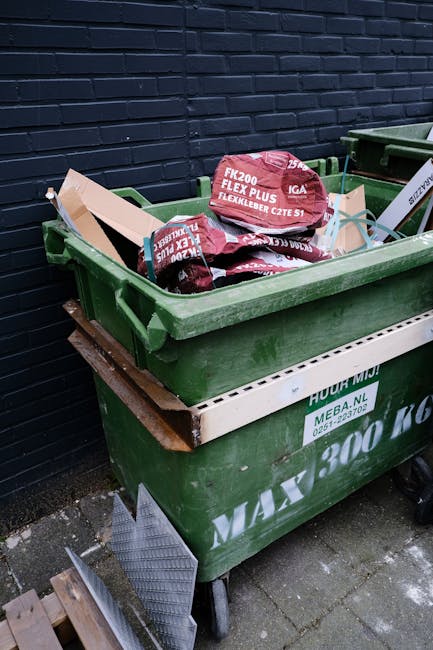
Permits and fines for skip and rubbish in Stratford council areas
If you are arranging a clear-out, renovation, or building job in Stratford, the rules around waste can catch you out fast. Permits and fines for skip and rubbish in Stratford council areas are not just boring admin; they can decide whether your waste job runs smoothly or turns into an avoidable headache. A skip left on the road without permission, rubbish piled up in the wrong place, or a missed duty-of-care detail can all lead to problems that cost time and money.
This guide breaks the topic down in plain English. You will learn when a permit is usually needed, what tends to trigger fines, how to stay on the right side of local rules, and what to do if you need a practical alternative to a skip. We will also look at common mistakes, compliance basics, and a few real-world scenarios that come up again and again in Stratford. To be fair, most issues are avoidable once you know what councils expect.
Table of Contents
- Why Permits and fines for skip and rubbish in Stratford council areas Matters
- How Permits and fines for skip and rubbish in Stratford council areas Works
- Key Benefits and Practical Advantages
- Who This Is For and When It Makes Sense
- Step-by-Step Guidance
- Expert Tips for Better Results
- Common Mistakes to Avoid
- Tools, Resources and Recommendations
- Law, Compliance, Standards, or Best Practice
- Options, Methods, or Comparison Table
- Case Study or Real-World Example
- Practical Checklist
- Conclusion
- Frequently Asked Questions
Why Permits and fines for skip and rubbish in Stratford council areas Matters
Waste rules matter because they are one of those things people only notice when something goes wrong. A skip outside a house on a narrow street may look harmless enough, but if it is on public land, it often needs permission. A pile of rubbish bags left out after a clearance can also attract complaints, block pavements, or be treated as fly-tipping if it is dumped in the wrong way. Nobody wants that sort of letter through the door on a damp Tuesday morning.
In Stratford, as in many London areas, the practical issue is space. Streets are busy, parking is tight, and shared access points are common around flats, terraces, and mixed-use roads. That means the difference between a smooth job and a penalty can be surprisingly small. One poorly placed skip, one missed collection, or one uninsured waste carrier is enough to create trouble.
There is also the money side. Fines, permit fees, extra collection charges, and delays can stack up quickly. Even if you are just clearing a garage or doing a small refurb, the wrong waste setup can end up costing more than the work itself. That is especially true when you are trying to keep a project moving on schedule. If you need a broader service once the waste starts piling up, it may make sense to look at waste removal options that are designed to handle mixed loads without the stop-start hassle of a skip.
Practical takeaway: if your waste may sit on a road, pavement, or shared access area, check the rules before it arrives. That one step prevents most fines and awkward conversations.
How Permits and fines for skip and rubbish in Stratford council areas Works
At a basic level, the system is about two questions: where will the waste go, and who is responsible for it? If a skip sits wholly on private land, such as a driveway with enough space, a permit may not be needed. If it is on a road, pavement, or other public highway area, permission is usually required. The exact process depends on the local authority that manages the street, but the general pattern is familiar across London.
Rubbish works a little differently. If you are putting bags, bulky items, or mixed waste out for collection, you need to follow the rules for storage, presentation, and collection timing. Leaving waste out too early or in the wrong place can lead to enforcement action. And if waste is handed to the wrong person, or to someone who cannot prove they can carry it legally, the problem can come back to you. That is the part many people miss. Ownership of the waste does not vanish just because someone else took it away.
Most people run into one of these scenarios:
- A skip is needed but there is no private driveway, so a permit is required.
- Rubbish is being cleared from a flat, and items need to be taken down shared stairs or out through a communal entrance.
- Builders' waste is accumulating faster than expected and needs an organised collection.
- A landlord or business wants everything gone quickly, but with proper paperwork and responsible disposal.
If you are dealing with building rubble, old plasterboard, timber, or renovation debris, a specialist builders waste clearance service can sometimes be more practical than trying to manage a permit-heavy skip setup. Same goes for office and shop environments where access windows are tight and disruption is a pain.
What usually triggers fines?
Fines are commonly linked to improper placement, unpermitted skips, obstruction, illegal dumping, or waste being handled by an unlicensed operator. Sometimes the issue is not dramatic. A skip slightly overhanging a restricted area, a collection left too late, or bags placed where they block passers-by can be enough. It sounds fussy, and yes, sometimes it is a bit, but the rules exist for safety and access.
There is also the issue of abandoned rubbish. If waste is dumped or left in a way that causes a nuisance, the council may investigate who was responsible. If you cannot show how the waste was moved, stored, and collected, you are on shakier ground than you think.
Key Benefits and Practical Advantages
Getting permits and waste handling right is not just about avoiding trouble. There are some very real upsides, especially for homeowners, landlords, contractors, and small businesses in Stratford.
- Fewer delays: no last-minute scramble when a skip cannot be placed.
- Lower risk of fines: compliant waste handling reduces the chance of enforcement action.
- Safer access: keeping roads, pavements, and communal areas clear helps everyone.
- Better planning: knowing the rules helps you choose the right waste method from the start.
- Cleaner presentation: especially useful for lets, sales, and commercial premises.
There is also a subtle but important benefit: peace of mind. When your waste is being handled properly, you do not have to keep checking the window every hour wondering whether the skip is causing a problem. It is one less thing to think about. And in the middle of a house clear-out, that matters more than people admit.
For some jobs, especially where furniture or mixed household items are involved, a dedicated clearance can be more suitable than a skip. Services like house clearance, flat clearance, or office clearance often remove the need to manage a permit at all, because the team loads and takes away the items directly. That can be a cleaner route, literally and administratively.
Who This Is For and When It Makes Sense
This topic is relevant to more people than you might expect. It is not just builders and big refurb contractors. In Stratford, it comes up for everyday situations all the time.
- Homeowners clearing lofts, garages, gardens, or entire properties.
- Landlords and letting agents dealing with tenant left-behind waste.
- Builders and tradespeople managing short-term access and site waste.
- Businesses clearing stock, fittings, packaging, or office furniture.
- Flat dwellers who cannot place a skip on private land.
If you are in a terraced street or a block of flats, a skip may be awkward from the start. If the property has no driveway, the permit process becomes much more important. And if there are neighbours, loading bays, controlled parking, or a narrow pavement, the practical side can get messy pretty quickly. That is where alternatives matter. A furniture disposal or furniture clearance service can save a lot of lifting, as well as the permit headache.
Sometimes the best option is not even about the size of the load. It is about access. A small amount of waste in a hard-to-reach area can be more trouble than a larger load in a simple one. Strange, but true.
Step-by-Step Guidance
If you want to avoid fines and keep things moving, use a simple process. Nothing fancy. Just sensible planning.
- Identify the waste type. Is it household rubbish, builders' waste, bulky items, garden waste, office waste, or mixed material?
- Check where it will sit. Private land usually differs from road space, pavement, or communal access.
- Decide whether a skip is actually the best method. For some jobs, direct clearance is faster and cleaner.
- Confirm permit needs early. If a skip may touch public land, sort permission before delivery.
- Choose a licensed, insured waste handler. Keep records where you can. It helps if questions come up later.
- Plan access and timings. Think about parking, loading, neighbours, school run times, and road restrictions.
- Keep waste contained. Do not let loose material spill, blow away, or block shared areas.
- Arrange collection promptly. The longer waste sits, the more likely it is to cause issues.
If your waste includes mixed household items, clearances often work better than skip hire. A well-organised home clearance can remove the heavy lifting and reduce the risk of leaving items out too long. For small business premises, business waste removal can also be the more controlled route.
One thing we see often: people wait until the last moment, then try to make a waste solution fit the street rather than the other way round. That is backwards. Start with access, then choose the disposal method. Much less stress.
Expert Tips for Better Results
These are the little details that usually make the difference between a smooth job and a nuisance.
- Measure the space properly. A skip that technically fits may still cause a problem if doors, bins, or pedestrian access are blocked.
- Ask about timing windows. Some locations are easier early in the day or midweek. In the evening, everything feels tighter.
- Use the smallest suitable waste method. Do not over-specify. Bigger is not always better.
- Separate reusable items where possible. It can reduce waste volume and make the job tidier.
- Think about neighbours. Shared access, noise, and blocked entrances can cause complaints faster than you expect.
- Keep paperwork simple but visible. Quotes, collection details, and any permit notes should be easy to find.
A small but practical point: if you are clearing a garden, wet soil, broken pots, and green waste can turn into a heavy mess quickly. A dedicated garden clearance is often easier than dragging everything into a skip, especially if access is awkward or the weather has turned the ground into mud. And in London, that happens more than we would like to admit.
Another good habit is to take photos before and after. Not because you expect a dispute, but because it creates a clear record. Handy if you need to prove that waste was removed properly or that an area was left clean.
Common Mistakes to Avoid
Most waste penalties happen because of preventable errors, not because someone set out to break the rules.
- Assuming a permit is unnecessary. If the skip is on public space, check first.
- Leaving rubbish out too early. Collections are not always immediate, and early set-out can trigger complaints.
- Using an unlicensed carrier. It can create liability headaches later.
- Blocking pavements or entrances. Even if the load is small, obstruction is still obstruction.
- Mixing hazardous items with general waste. That needs specialist handling.
- Forgetting communal rules. Flats and managed buildings often have extra conditions.
One easy-to-miss error is assuming that "it will be gone by tomorrow" makes the problem go away. Councils and neighbours do not necessarily think in those terms. If a pile is there, it is there.
If you are dealing with old appliances, broken wardrobes, or a mix of bulky household items, it is often safer to use a specialist collection rather than leaving things to chance. Even something as simple as a sofa can become a nuisance if it sits in the wrong place for too long. For that kind of job, garage clearance or furniture-focused disposal can be more straightforward than a skip.
Tools, Resources and Recommendations
You do not need a complicated toolkit here, but a few practical resources make life easier.
- Measuring tape: useful for access widths, skip dimensions, and loading space.
- Phone camera: useful for recording the site before and after.
- Basic checklist: keeps everyone aligned on timing, access, and collection.
- Written quote or booking note: helps avoid confusion about what is included.
- Insurance and waste handling details: worth confirming before anything starts.
If you are booking a professional clearance, it is sensible to review service information carefully. Pages such as pricing and quotes, insurance and safety, and recycling and sustainability can help you understand how a responsible provider approaches the job. You are not just buying a lift-away service. You are buying fewer surprises.
For larger business clean-outs, especially where stock, desks, shelving, or old fixtures are involved, office clearance is worth considering. It keeps the process structured and avoids a pile of mixed rubbish hanging around in a public-facing space.
Law, Compliance, Standards, or Best Practice
Without turning this into a legal lecture, there are a few compliance basics worth respecting. Waste should be handled responsibly, and the person producing it usually retains a duty to make sure it is transferred to someone authorised to carry and dispose of it properly. That is the general principle most people trip over.
Best practice usually includes:
- Using a licensed waste carrier where appropriate.
- Keeping waste contained and not causing obstruction.
- Getting permission before placing anything on public land.
- Separating hazardous materials from ordinary rubbish.
- Keeping records of collections, invoices, or booking details.
For Stratford residents and businesses, the main point is simple: do not leave compliance to guesswork. Council rules, highway permissions, parking controls, and building management requirements can overlap. If your waste job touches more than one of those, slow down and check each part. A rushed decision can be expensive. Sometimes very expensive, annoyingly so.
It is also worth noting that flat blocks, managed estates, and commercial properties may have their own site rules beyond the local authority position. That is where many people get caught out. The council may be one issue; the landlord or managing agent can be another.
Options, Methods, or Comparison Table
Choosing between a skip and a direct clearance is often the real decision. Here is a practical comparison.
| Option | Best for | Pros | Watch-outs |
|---|---|---|---|
| Skip hire | Bulk waste, renovation debris, longer projects | Good capacity, simple for ongoing jobs | May need a permit if on public land, can block space |
| Rubbish collection | Smaller loads, mixed items, quick removal | Fast, less space needed, less site disruption | May require careful booking and load description |
| House or flat clearance | Bulky household contents, moves, probate, decluttering | Hands-on, efficient, less lifting for you | Needs access planning and clear instructions |
| Builders' waste clearance | Construction and trade waste | Suitable for rubble, timber, packaging, site clear-ups | Check for restricted items and access conditions |
For many Stratford jobs, the best method is the one that creates the least friction with the street, the building, and your timetable. Simple as that. If you are not sure, a quick comparison of access and waste type usually makes the answer obvious.
Case Study or Real-World Example
Picture a small refurbishment in a Stratford terrace. The kitchen is being replaced, the old units are out, and the builder wants a skip for the week. Sounds straightforward. Then reality arrives: there is no driveway, the pavement is narrow, and resident parking is already tight by 8am. A skip on the road would need proper permission, and even then it might make access awkward for neighbours.
In that kind of situation, the project can often be handled more cleanly with a timed clearance rather than a static skip. The waste is loaded up, removed promptly, and the street is left open. That reduces the risk of fines, avoids a permit delay, and keeps the job moving. No long wait, no skip sitting half-full while the weather turns damp and grey.
A similar thing happens with flat clear-outs. If there are bulky items, old mattresses, broken furniture, and a few bags of mixed waste, a skip may be the least efficient option. A direct flat clearance can be easier because it deals with access, lifting, and removal in one go. The result is usually less hassle for the resident and fewer issues for the building.
The biggest lesson from real jobs? The best solution is not always the one that looks cheapest on paper. The cheapest-looking option can be the one that attracts the most friction.
Practical Checklist
Use this before you book anything.
- Have you identified the exact type of waste?
- Will any part of the waste sit on public land?
- Do you need a permit, or would a clearance service be simpler?
- Have you checked building or estate rules if you are in a flat or managed property?
- Is the waste carrier licensed and insured?
- Have you confirmed the collection time and access route?
- Will the waste block pavements, doors, or parking spaces?
- Are hazardous items excluded and dealt with separately?
- Do you have a written quote or booking confirmation?
- Have you planned for neighbours, deliveries, or busy road times?
If you can tick most of those boxes, you are already in a much better position than most people who rush the process. That may sound a little blunt, but it is true.
Conclusion
Permits and fines for skip and rubbish in Stratford council areas are really about one thing: planning waste the right way before it becomes a problem. If a skip sits on public space, permission matters. If rubbish is left in the wrong place, fines and complaints can follow. And if the load, access, or timing is awkward, a direct clearance may simply be the smarter choice.
The good news is that most of this is manageable with a little forethought. Check the site, think about access, choose the right method, and keep the waste trail clean and documented. That alone removes a lot of risk. And honestly, it makes the whole job feel calmer.
Get a free quote today and see how much you can save.
Whether you are clearing a home, a flat, a garage, or a worksite, the safest approach is usually the simplest one. Do the practical thing, keep it tidy, and you will save yourself a lot of grief later.
Frequently Asked Questions
Do I need a permit for a skip in Stratford?
If the skip is placed on a public road, pavement, or other highway area, a permit is usually needed. If it is fully on private land, it may not be. The key is not to assume-check the placement first.
What happens if I put a skip out without permission?
You may face enforcement action, removal costs, or a fine. Even if nothing happens immediately, the risk is still there. It is far cheaper to sort permission before delivery.
Can I leave rubbish bags outside my property for collection?
Only if you are following the relevant collection rules and timing. Leaving bags out too early, or in a place that blocks access, can lead to complaints or penalties.
Who is responsible if waste is dumped illegally after I pay someone to take it?
If you failed to use a proper waste carrier, or cannot show how the waste was transferred, you may still be questioned. Keeping records and choosing a responsible operator matters more than people think.
Is a clearance service better than skip hire?
Sometimes, yes. If access is tight, the load is mixed, or you want the waste removed quickly, a clearance service can be easier and less disruptive than placing a skip.
What kind of waste causes the most problems?
Builders' waste, bulky furniture, mixed rubbish, and anything potentially hazardous tend to create the most issues. They need clear handling and, in some cases, specialist disposal.
Do flats need different waste arrangements?
Often they do. Shared entrances, communal areas, and limited external space can make skip placement difficult, so a flat-specific clearance can be a better fit.
How can I avoid fines when clearing a garden or garage?
Plan the removal route, keep waste contained, and decide early whether a skip or a direct clearance is more suitable. For awkward access, a dedicated clearance is often the safer option.
What should I ask before booking waste removal?
Ask what is included, whether access is suitable, whether any permit may be needed, and how the waste will be handled. A clear answer up front saves a lot of awkwardness later.
Are there special rules for business waste?
Yes, businesses should be especially careful about waste records, storage, and transfer arrangements. A commercial setting also tends to have more access and timing pressures.
Can furniture and bulky items go in a skip?
They sometimes can, but it is not always the best option. Furniture can take up a lot of space quickly, so furniture-specific collection or disposal is often more efficient.
What is the easiest way to stay compliant in Stratford?
Check whether the waste will go on private or public land, use a proper carrier, keep the load controlled, and choose the method that best suits the property. A little preparation goes a long way.
If you want a cleaner, simpler way to deal with waste in Stratford, explore our services and policies, including about us and our contact us page when you are ready to talk through the best option. A quick conversation can save a surprising amount of stress.